

Natural vs. Lab-Grown Diamonds
What Actually Is a Natural Diamond?
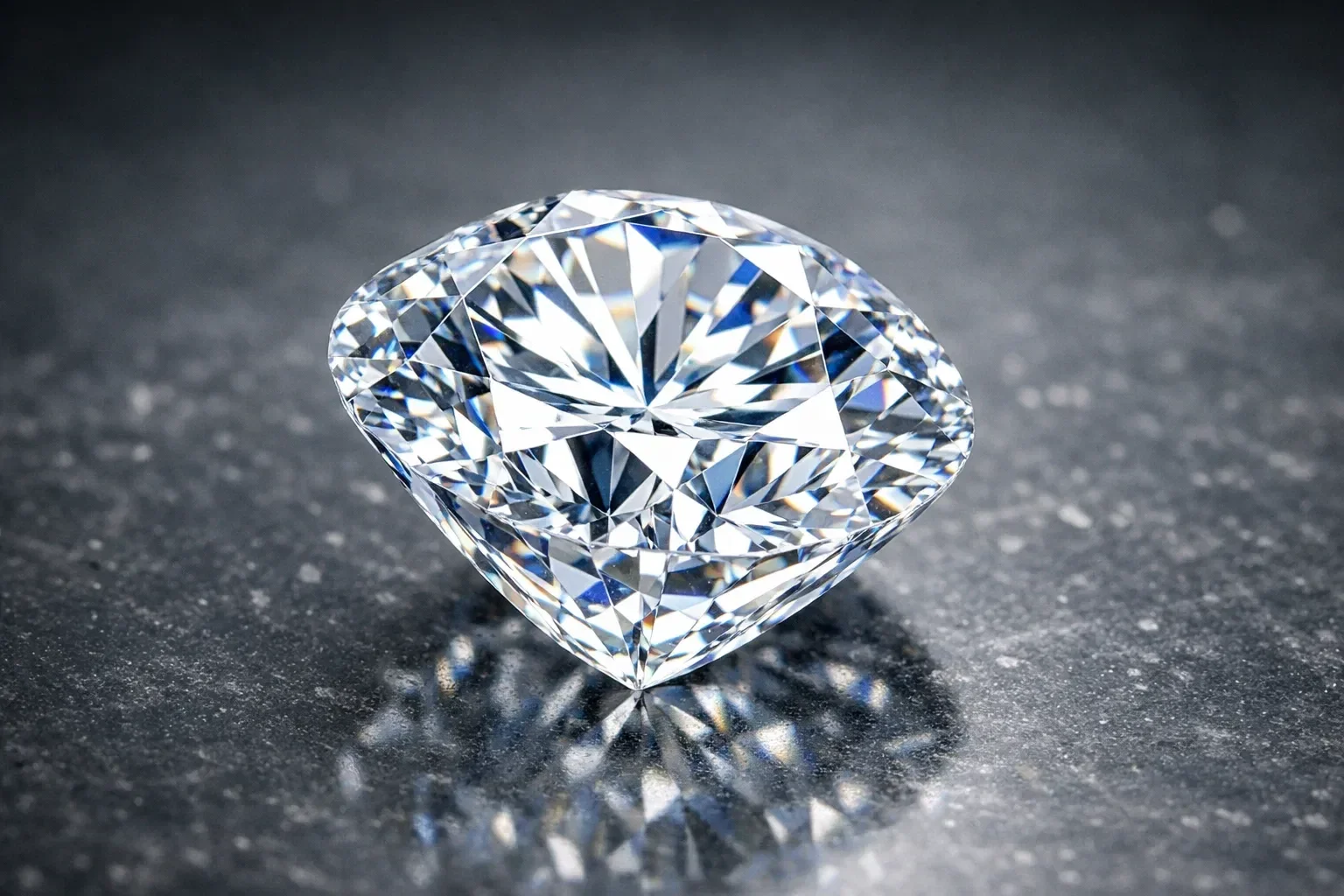
A natural diamond is, at its core, a miracle of geology.
Billions of years ago, we're talking anywhere from 90 million to 3 billion years carbon atoms were crystallised under conditions of extreme heat and pressure, more than 100 miles beneath the Earth's surface. They sat there, undisturbed, for millions of years. Then, in dramatic volcanic events, they were propelled upward through the Earth's mantle and crust at speeds of around 1,000 kilometres per hour, carried inside molten rock called kimberlite. Most came to rest at the site of these ancient volcanic eruptions. Some were eventually washed away by rivers and erosion, ending up on riverbeds, ocean floors, and beaches.
The sheer improbability of this journey is why natural diamonds are genuinely rare. Consider this: geologists have sampled close to 7,000 kimberlite pipes over the last 140 years. Only around 60 have been found to contain enough diamonds to make large-scale mining economically viable. Today there are roughly 30 significant diamond mines operating worldwide and only 7 qualify as what the industry calls Tier 1 deposits.
Global natural diamond production peaked in 2005 and has been declining ever since. By 2023, annual production was 37% lower than that peak. Several major mines including the iconic Argyle Mine in Australia, which once accounted for more than 10% of global production have closed in recent years. More closures are expected by the end of this decade, with very few new discoveries in the pipeline.
What does this mean for you as a buyer? It means that every natural diamond you hold has a story that no factory can replicate, a story measured not in weeks, but in billions of years.
How Are Lab-Grown Diamonds Made?
Lab-grown diamonds are exactly what they sound like: diamonds created in a laboratory rather than extracted from the Earth. They have the same chemical composition as natural diamonds — pure carbon in a crystalline structure — and the same physical properties. They are, by the strictest technical definition, real diamonds. However, they are manufactured products, typically produced in a matter of weeks, and they are distinct from natural diamonds in ways that matter.
There are two main methods of production:
High Pressure High Temperature (HPHT)
This method attempts to replicate the conditions found deep within the Earth. A diamond seed crystal is placed into a press alongside a mixture of carbon and metals such as iron, nickel, and cobalt. The press generates temperatures of 1,300–1,600°C and pressures of around 870,000 pounds per square inch roughly equivalent to the force of a commercial jet balanced on the tip of a finger. Under these conditions, the carbon dissolves and migrates onto the seed crystal, growing a synthetic diamond over a period of days to a few weeks. HPHT diamonds tend to grow in a cuboctahedral shape, growing in 14 directions simultaneously.
Chemical Vapor Deposition (CVD)
CVD uses a flat diamond seed plate placed inside a chamber filled with gases primarily methane and hydrogen. The chamber is heated to between 900–1,200°C, and microwaves break apart the methane molecules, causing carbon atoms to deposit in layers onto the seed crystal. The result is a square, tabular diamond crystal. CVD takes a similar amount of time to HPHT, but is significantly more energy-intensive due to the use of high-powered microwaves.
One important point worth flagging: while lab-grown diamonds are often marketed as "mining-free," this isn't entirely accurate. The reactors used to produce them are built from high-grade steel, a material with significant embodied carbon. CVD diamonds require methane (typically sourced from fossil fuel extraction) and hydrogen. HPHT production requires graphite and metals. And the seeds used to grow lab diamonds? They're diamonds themselves natural or synthetic.
Can You Tell a Natural Diamond from a Lab-Grown Diamond?
This is one of the most common questions we hear and one of the most misunderstood.
The short answer: yes, professionals absolutely can tell them apart. The claim that natural and lab-grown diamonds are "indistinguishable" is simply not accurate.
Because natural and lab-grown diamonds grow through fundamentally different processes, their internal grain patterns differ much like the grain patterns in different types of wood. These differences, along with variations in nitrogen content, fluorescence, and spectral signatures, allow trained gemologists and specialist instruments to identify a diamond's origin reliably.
There are more than 20 diamond verification instruments currently on the market, used by retailers, manufacturers, and grading laboratories to detect the difference. The Gemological Institute of America (GIA) the world's foremost diamond authority uses spectroscopic identification techniques to read a diamond's internal signature and determine whether it grew in the Earth's mantle or in a factory.
One telling chemical detail: producing colourless lab-grown diamonds requires the almost complete removal of nitrogen, which is present in approximately 99% of natural diamonds. The extended time natural diamonds spend under the Earth's crust also creates unique responses to ultraviolet light that lab-grown diamonds cannot replicate.
What about certification?
Both natural and lab-grown diamonds can receive grading reports from independent laboratories like the GIA. Critically, these reports look different. A GIA report for a lab-grown diamond clearly states "Laboratory-Grown" on the document and includes information on whether the stone was made via CVD or HPHT. When you purchase a diamond from Rani Jewels, the certificate tells you exactly what you're buying.
Under UK law (overseen by the Advertising Standards Authority) and US law (governed by the Federal Trade Commission), sellers must use clear, approved terminology. The word "diamond" used alone always refers to a natural diamond. Lab-grown diamonds must be identified as "synthetic," "laboratory-grown," or "laboratory-created" terms like "cultured," "above-ground," or "real" are not acceptable descriptors.
At Rani Jewels, every diamond comes with full documentation of its origin. There are no grey areas.
How Do the Prices Compare?
When lab-grown diamonds first appeared in the jewellery market in meaningful quantities around 2016, they were priced at roughly 10–20% less than comparable natural diamonds. That gap has since widened enormously.
Today, lab-grown diamonds typically retail at 15–25% of the price of a comparable natural diamond meaning they are 75–85% cheaper. Diamond analyst Paul Zimnisky, who has tracked prices across both categories since 2015, found that a 1.5-carat lab-grown stone dropped 83% in price between mid-2015 and mid-2024, falling from approximately $10,750 to $1,805. This price decline reflects the economics of manufacturing: as technology improves, production scales up, and competition increases, costs fall.
Natural diamond prices have followed a different trajectory. They fluctuate in response to supply and demand, but over the long term have shown steady appreciation. Bain & Company's historical analysis found that polished natural diamond prices rose by an average of 3% per year over the 50 years from 1970 to 2019. More recently, despite a post-pandemic dip, rough natural diamond prices remain approximately 37% higher than they were in 2007.
What does this mean in practice?
If budget is your primary consideration, a lab-grown diamond gives you significantly more stone for your money a larger carat weight, a higher clarity grade, or both, at a fraction of the cost.
If long-term value retention matters to you, natural diamonds have a demonstrated track record that lab-grown diamonds, as a relatively new product category in free-fall pricing, currently cannot match.
Neither answer is wrong. It depends entirely on what you value most.
Are Lab-Grown Diamonds Really More Sustainable?
This is perhaps the most nuanced part of the conversation and the area where marketing has most outpaced reality.
Lab-grown diamonds are frequently marketed as the "sustainable" or "eco-friendly" choice. The truth is considerably more complicated.
The energy question
Producing a lab-grown diamond requires temperatures approaching 20% of the surface temperature of the sun. Both HPHT and CVD processes are highly energy-intensive and CVD is particularly demanding due to its use of high-powered microwaves.
The environmental impact of that energy use depends almost entirely on where the energy comes from. As of 2024, approximately 46% of lab-grown diamonds are produced in China and 26% in India. In China, 62% of grid electricity comes from coal. In India, that figure is 74%. This means the majority of lab-grown diamonds produced globally are powered predominantly by fossil fuels.
Research by sustainability consultancy Sphera estimated that the carbon footprint of a CVD lab-grown diamond produced in India ranges from 260–612 kg of CO₂ equivalent per polished carat. In China, the figure is around 523 kg CO₂e. By comparison, if 100% renewable energy is used, the figure can fall as low as 17 kg CO₂e a dramatic difference that illustrates just how location and energy source-dependent these claims are.
For context, a 1-carat polished natural diamond produced by major Natural Diamond Council members was estimated at approximately 106.9 kg CO₂e in 2019 (Scope 1 and 2 emissions) meaning a coal-powered lab diamond can carry a significantly higher footprint than a mined natural diamond.
Carbon capture claims
Some lab-grown diamond producers market their stones as "carbon negative," claiming they capture more carbon than they emit. The carbon physically locked inside a 1-carat lab-grown diamond amounts to about 0.2 grams — roughly equivalent to the carbon emitted by sending one or two emails. Meanwhile, the full production process — synthesis, cutting and polishing, setting in precious metals, packaging, and distribution — generates far more CO₂ than the diamond itself sequesters. Regulators in the US, UK, and EU have all moved to scrutinise such claims.
What the natural diamond industry is doing
Leading natural diamond producers have made significant commitments to decarbonise. De Beers Group is targeting carbon neutrality across its operations by 2030. Rio Tinto has committed to a 50% reduction in Scope 1 and 2 emissions by 2030 and net zero by 2050. The industry recycles 84% of the water used in diamond recovery and has established extensive biodiversity conservation programmes NDC members protect close to four times the land they mine through dedicated wildlife conservation.
The honest summary
Neither category is automatically greener than the other. A lab-grown diamond produced using 100% renewable energy in a well-managed facility can genuinely have a lower environmental footprint than a mined diamond. But most lab-grown diamonds produced today are not made this way. If environmental impact matters to you, the right question to ask is not "natural or lab-grown?" but "where was this specific diamond produced, and what energy powered it?"
Are Natural Diamonds Ethical?
The legacy of "blood diamonds" cast a long shadow over the natural diamond industry and it's a history that deserves to be taken seriously. But the industry of 2025 looks very different from the one depicted in news stories of the 1990s, and it's important to understand what has changed.
The Kimberley Process
In 2003, the Kimberley Process Certification Scheme (KPCS) was established as a joint initiative between governments, the diamond industry, and civil society mandated by the United Nations and the World Trade Organization. Its purpose: to prevent conflict diamonds from entering the mainstream market.
Today, over 80 countries participate in the process. Conflict diamonds now account for less than 1% of the rough diamond trade a figure that once stood at 4–15% in the 1990s. Every international shipment of rough diamonds must be accompanied by a certificate guaranteeing its conflict-free origin.
Beyond the Kimberley Process
The natural diamond industry has built substantially on the KPCS foundation. The World Diamond Council's System of Warranties requires buyers and sellers to include a warranty statement confirming ethical sourcing every time a diamond changes hands not just at export. Companies including De Beers, Tiffany & Co, and Chow Tai Fook cite this in their supplier codes of conduct.
The Responsible Jewellery Council's Code of Practices sets rigorous standards covering human rights, labour rights, health and safety, and environmental impact — with mandatory third-party auditing for member companies.
Economic impact
Perhaps the most compelling part of the ethical picture is the economic contribution of natural diamond mining to producing countries. The natural diamond industry supports the livelihoods of an estimated 10 million people globally across the supply chain. 99.7% of Natural Diamond Council member employees are local people from the countries where mines operate, paid on average 64% more than the national average salary.
In Botswana, diamonds represent 80% of total exports and contributed 33% of GDP in 2021. The revenue funds free primary education for every child in the country. In Namibia, diamonds account for close to 68% of mineral output. In Canada's Northwest Territories, diamond mining is the largest private sector industry, contributing 24% of total GDP in 2020 and generating over $24 billion in economic contribution since 1996.
Up to 80 cents of every dollar generated by the natural diamond industry can remain within local communities through employment, procurement, infrastructure investment, and government royalties.
Traceability
The industry is also accelerating traceability. Technologies including blockchain platforms like De Beers' Tracr™ and Sarine's traceability ecosystem now allow individual diamonds to be tracked digitally from mine to store. Over 1.5 million rough diamonds are registered on Tracr™ alone.
At Rani Jewels, we source our natural diamonds from suppliers who operate within these frameworks. We are happy to discuss the provenance of any stone in our collection.
Which Diamond Holds Its Value?
This is a question that matters more than many buyers initially realise, particularly for engagement rings, which are often among the most significant financial purchases a couple makes.
The honest answer is that natural diamonds have a significantly stronger track record for value retention than lab-grown diamonds.
As outlined in Section 4, lab-grown diamond prices have fallen dramatically and consistently since 2015. A stone purchased several years ago for $10,000 might be worth $1,800–2,500 on the resale market today. As production capacity continues to grow and manufacturing costs continue to fall, there is no clear floor in sight for lab-grown diamond prices.
Natural diamonds are not a guaranteed investment no gemstone is but their limited and declining supply creates a fundamentally different dynamic. The rarity that makes them special also provides a degree of price support that manufactured goods simply cannot replicate.
If you are buying a diamond purely as a piece of jewellery you'll wear and love, resale value may not be your primary concern and that's a perfectly valid position. But if you're purchasing a stone you may one day wish to upgrade, pass down, or resell, this distinction is worth weighing carefully.
Your Diamond Buying Checklist
Whether you're choosing a natural or a lab-grown diamond, here are the questions every buyer should ask before committing.
Ask for certification. Any reputable diamond should come with a grading report from an independent laboratory GIA, IGI, or HRD. This document confirms the stone's carat weight, cut, colour, clarity, and critically — its origin (natural or laboratory-grown). Never purchase a significant diamond without one.
Check the terminology. Under UK law, a diamond sold without a qualifier is a natural diamond. If a stone is lab-grown, this must be clearly stated. If a seller is vague about origin, walk away.
Understand the 4 Cs. Cut, Colour, Clarity, and Carat weight remain the universal language for evaluating diamond quality for both natural and lab-grown stones. A GIA Excellent cut grade in a colourless (D–F) stone with VS clarity and over 1 carat will be exceptional regardless of origin.
Ask about energy source for lab-grown. If environmental sustainability matters to you, ask the retailer whether they know the production origin of their lab-grown diamonds and what energy source the factory uses. Not every retailer will know but the best ones will.
Ask what the retailer's returns and upgrade policy is. Given the price volatility of lab-grown diamonds, a retailer with a clear upgrade path gives you more flexibility.
Research the retailer's sourcing commitments. Do they adhere to the Kimberley Process and System of Warranties? Do they have a published sourcing policy? This matters for natural diamonds in particular.
At Rani Jewels, every diamond natural and lab-grown comes with full certification, clear documentation of origin, and a team of knowledgeable specialists who can walk you through every detail. We'd rather you buy the right diamond than simply buy a diamond.
Frequently Asked Questions
Are lab-grown diamonds real diamonds?
Yes. Lab-grown diamonds have the same chemical composition (pure carbon), the same crystal structure, and the same physical properties as natural diamonds. They are scientifically classified as diamonds. However, they are manufactured products — made in weeks rather than billions of years — and they are legally and commercially distinct from natural diamonds, which must be clearly identified.
Can professionals tell a natural diamond from a lab-grown diamond?
Absolutely. Despite claims to the contrary, all lab-grown diamonds can be detected using professional verification instruments. These tools examine grain patterns, nitrogen content, fluorescence, and spectral signatures. Because natural and lab-grown diamonds grow through different processes, they leave different internal "fingerprints." The claim that they are indistinguishable is false.
Do lab-grown diamonds hold their value?
Currently, lab-grown diamond prices have fallen sharply — by around 83% since 2015 for some sizes. As production capacity grows globally, the price trend is likely to continue downward. Natural diamonds have historically shown steady long-term price appreciation and have stronger resale value. If value retention matters to you, natural diamonds carry a significant advantage.
Are lab-grown diamonds better for the environment?
Not necessarily. The environmental footprint of a lab-grown diamond depends heavily on where it was made and what energy powered the process. Over 70% of lab-grown diamonds are produced in China and India, where grids are predominantly coal-powered. A lab-grown diamond made with renewable energy can have a very low footprint; one made with coal can have a higher footprint than a mined natural diamond. Always ask about production origin.
What is the difference between HPHT and CVD lab-grown diamonds? Both produce real diamonds, but via different methods. HPHT uses extreme pressure and temperature to crystallise carbon onto a seed crystal, mimicking Earth's natural process, and produces a cuboctahedral-shaped rough diamond. CVD uses a gas chamber and microwave energy to deposit carbon in layers, producing a flatter, square-shaped rough stone. CVD is generally more energy-intensive. Both types are detectable by professional instruments.
What is the Kimberley Process? The Kimberley Process Certification Scheme (KPCS) is an international certification system established in 2003, mandated by the United Nations and the World Trade Organization. It requires that all rough diamonds traded internationally be accompanied by a certificate guaranteeing they are conflict-free. Over 80 countries currently participate.
What does a GIA certificate tell me? A GIA grading report is an independent, expert assessment of a diamond's quality. It documents the stone's carat weight, cut grade, colour grade, clarity grade, fluorescence, and measurements. For lab-grown diamonds, it will clearly state the stone's origin and production method. It does not determine monetary value it describes the stone objectively so you can compare like with like.
Why are natural diamonds becoming rarer? Global production peaked in 2005 and has declined by 37% since then. Several major mines have closed, including Argyle (Australia), which accounted for over 10% of world supply. Very few new deposits have been discovered this century, and because it typically takes more than a decade from discovery to first production, only a handful of new mines are expected in the coming years. Supply is structurally declining while demand remains resilient.
Is a lab-grown diamond a good choice for an engagement ring? It depends on your priorities. If you want a larger, higher-quality stone within a specific budget, lab-grown diamonds offer exceptional value. If long-term value retention, rarity, and the romance of a stone formed over billions of years matter to you, a natural diamond may be the better fit. Many couples choose lab-grown for the centre stone and natural diamonds for accent stones, or vice versa. There is no universally right answer — only the answer that's right for you.
Find Your Perfect Diamond at Rani Jewels
Whether your heart is set on a natural diamond with a story as old as the Earth itself, or a lab-grown diamond that gives you more brilliance for your budget, Rani Jewels has you covered.
This World Diamond Day, we're celebrating everything that makes diamonds remarkable — the science, the craft, the emotion, and the extraordinary journey from raw stone to finished jewel. Every diamond in our collection, natural and lab-grown, comes with full certification, transparent sourcing information, and the guidance of our team to help you find the one that is genuinely right for you.
Explore our collections:
- Engagement Rings
- Diamond Earrings — the perfect World Diamond Day gift
- Bespoke Diamond Jewellery — your vision, crafted by our experts
Not sure where to start? Book a complimentary consultation with one of our diamond specialists. We'll walk you through your options without pressure, because the right diamond is the one you'll love for a lifetime.